
Article: The History of Belt Bags
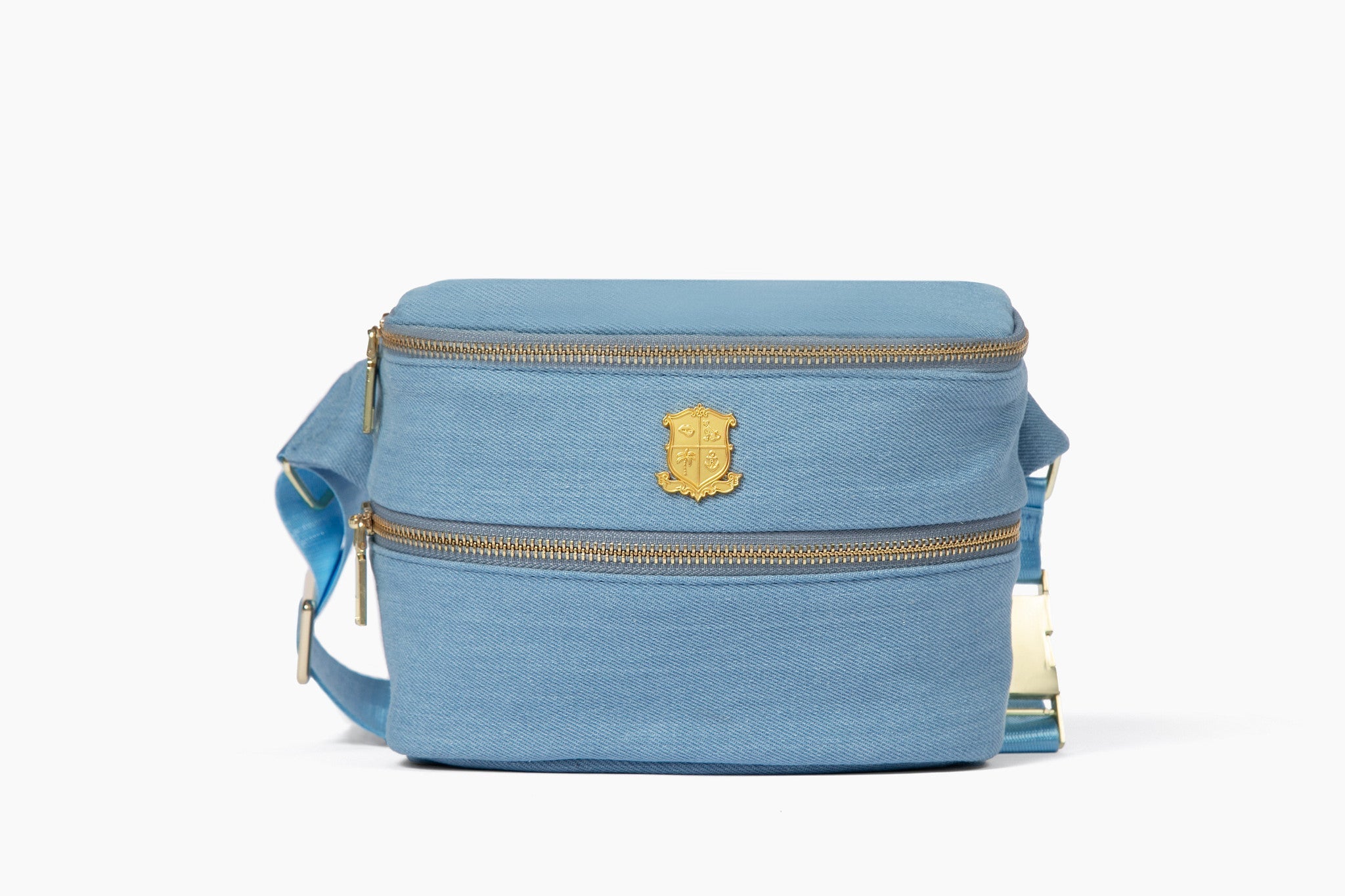
The History of Belt Bags
The Belt Bag: A Complete Guide to the World's Most Versatile Cross Body Bag
Whether you call it a belt bag, a cross body bag, a fanny pack, or a waist bag — this hands-free accessory has officially cemented its place as one of the most practical and stylish bags in fashion history. In this guide, we're diving deep into everything you need to know about the belt bag: where it came from, how it's made, how to wear it, and why the belt bag is the cross body bag you didn't know you needed.
What Is a Belt Bag?
A belt bag is exactly what it sounds like — a small bag worn around the waist, secured by a buckled strap. The belt bag sits snugly against the body, typically resting at the hips or across the torso, making it one of the most secure and ergonomic ways to carry your essentials. The belt bag is often used interchangeably with the term cross body bag, because many modern belt bags can be worn across the chest or over the shoulder just as easily as around the waist.
Today, the belt bag comes in dozens of styles — from sleek leather belt bags to sporty nylon cross body bags — and is sold by virtually every major fashion house and streetwear brand in the world. But the belt bag wasn't always a runway staple. Its origins are surprisingly humble.
The History of the Belt Bag: From Ancient Pouches to Modern Cross Body Bags
Ancient Origins of the Belt Bag
The concept of a belt bag is ancient. Archaeological evidence shows that humans have been attaching small pouches to their belts for thousands of years. Ötzi the Iceman — a 5,300-year-old mummy discovered in the Alps — was found wearing a belt bag made from calf leather, containing small tools and tinder. This early belt bag is one of the oldest personal accessories ever discovered.
Medieval merchants and travelers also used belt bags, often called "girdle pouches," to keep coins and valuables close to their bodies while on the road. These early cross body bag predecessors were purely functional — no fashion involved. The belt bag was a tool of survival long before it was a tool of style.
The 20th Century: The Belt Bag Goes Mainstream
The modern belt bag as we know it began to take shape in the 1980s. Active lifestyles called for hands-free carrying solutions, and the belt bag — often called a fanny pack — answered that call perfectly. Hikers, cyclists, travelers, and theme park visitors all embraced the belt bag for its practicality. The cross body bag version gained traction around the same time as people began slinging their belt bags across the chest.
By the early 1990s, the belt bag had become a pop culture icon — spotted on tourists, athletes, and everyday people alike. However, the belt bag also became the subject of fashion ridicule as the decade wore on. For a time, wearing a belt bag was considered deeply unfashionable.
The 2010s Renaissance: The Belt Bag Comes Back in Style
Everything changed when luxury fashion brands got their hands on the belt bag. Gucci, Louis Vuitton, Prada, and Supreme began releasing premium belt bags and cross body bags that completely transformed the perception of the accessory. Suddenly, the belt bag wasn't a tourist cliché — it was a high-fashion statement. Celebrities were spotted wearing designer belt bags on red carpets and street-style photos, and the belt bag's comeback was complete.
Today, the belt bag is one of the most searched accessory categories online. Searches for "belt bag," "cross body bag," and "belt bag women" consistently rank among the top fashion queries across Google and social media platforms.
How Is a Belt Bag Made? The Creation Process Explained
Ever wondered what goes into making a belt bag? Whether you're looking at an artisan leather belt bag or a mass-produced nylon cross body bag, the creation of a belt bag involves several careful steps. Here's a breakdown of how a belt bag is made from start to finish.
Step 1: Choosing the Material for the Belt Bag
The first step in creating a belt bag is selecting the right material. Belt bags can be made from a wide variety of materials, each lending the cross body bag a distinct look, feel, and durability level. The most common belt bag materials include:
- Full-grain leather — the premium choice for luxury belt bags and cross body bags, known for its durability and beautiful aging
- Nylon and polyester — lightweight and water-resistant options popular in sporty belt bags and outdoor cross body bags
- Canvas — a sturdy, casual material often used in heritage-style belt bags
- Vegan leather and PU — cruelty-free alternatives to genuine leather, widely used in fashion-forward belt bags
- Woven fabrics — used in boho-style and artisanal belt bags and cross body bags
Step 2: Designing the Belt Bag Pattern
Once the material is chosen, a pattern designer creates a template for the belt bag. This involves mapping out the main body of the belt bag, the interior pockets, the zipper panels, the strap, and any decorative elements. For a cross body bag that doubles as a belt bag, the pattern must account for multiple strap configurations — a key design challenge.
The belt bag pattern is typically cut from flat sheets of material using a die-cutting press or a precision cutting machine. For artisan belt bags, the cutting is often done by hand. Every panel of the belt bag must be measured precisely to ensure clean seams and a proper fit.
Step 3: Cutting the Belt Bag Components
After the belt bag pattern is finalized, each piece is cut from the chosen material. A standard belt bag includes the following components: a front panel, a back panel, side gussets (for depth), a zipper panel, an interior lining, belt loops or D-ring attachments, and the adjustable belt strap itself. For a cross body bag configuration, an additional longer shoulder strap or cross-body strap is cut and prepared.
Step 4: Stitching the Belt Bag Together
With all pieces cut, the assembly of the belt bag begins. Skilled sewers or automated machines stitch the belt bag panels together using high-tensile thread. Leather belt bags require specialized needles and slower stitch speeds to prevent tearing. Nylon cross body bags, by contrast, can be assembled quickly with industrial sewing machines.
Key stitching points in a belt bag include the zipper insertion (where the zipper is sewn into the belt bag opening), the gusset seams (which give the belt bag its 3D shape), and the strap attachment points (which must withstand significant tension when the belt bag is worn as a cross body bag). Bartack stitching — a dense, reinforced stitch — is often used at the stress points of a belt bag for added durability.
Step 5: Adding Hardware to the Belt Bag
Hardware is a defining element of any belt bag. The buckle, zippers, D-rings, rivets, and snaps are all installed during this phase of belt bag construction. For luxury belt bags, hardware is typically made of solid brass or zinc alloy, then plated in gold, silver, or brushed nickel. For performance cross body bags, lightweight anodized aluminum or plastic hardware is commonly used.
The belt strap of the belt bag is threaded through the buckle and tested for adjustability. A well-made belt bag strap should slide smoothly and lock securely at any adjustment point, whether worn as a waist belt bag or a cross body bag.
Step 6: Lining and Finishing the Belt Bag
The interior of a quality belt bag is lined with fabric — often nylon, suede, or cotton — to protect contents and give the belt bag a polished, professional appearance. Interior pockets, key clips, and card slots are sewn into the lining at this stage. The lining is then inserted into the belt bag body and stitched closed, concealing all raw edges.
Finally, the belt bag goes through a quality control process. Seams are inspected, zippers are tested, hardware is checked for secure attachment, and the overall shape of the belt bag is assessed. A high-quality belt bag should be symmetrical, cleanly finished, and able to hold its shape when both empty and loaded.
How to Wear a Belt Bag: Styling Your Cross Body Bag
One of the greatest things about a belt bag is its versatility. Here are the most popular ways to wear a belt bag in 2025 and beyond.
- Classic waist belt bag — worn with the buckle at the front, the belt bag resting on your hips. This is the most traditional way to wear a belt bag.
- Cross body bag style — thread one shoulder through the strap and wear the belt bag diagonally across your chest. This cross body bag look is popular for city outings and travel.
- High-waist belt bag — worn higher on the torso, above the natural waist, for a fashion-forward cross body bag aesthetic.
- Back belt bag — spin the belt bag around to the back for a sleek, minimalist look that keeps your front silhouette clean.
- Over the jacket belt bag — layering a belt bag over a coat or blazer is one of the hottest cross body bag styling trends right now.
Why the Belt Bag Is the Best Cross Body Bag You Can Buy
Still on the fence about adding a belt bag to your collection? Here's why the belt bag deserves a spot in every wardrobe.
- Hands-free convenience — a belt bag keeps your hands free while your essentials stay close and secure.
- Versatility — the same belt bag works as a cross body bag, a waist bag, or even a shoulder bag.
- Security — wearing a belt bag as a cross body bag keeps your valuables tucked close to your body, reducing theft risk.
- Style — today's belt bags are genuinely beautiful accessories, not an afterthought.
- Travel-friendly — a belt bag is the perfect travel cross body bag, keeping your passport, phone, and wallet organized and accessible.
Conclusion: The Belt Bag Is Here to Stay
From ancient leather pouches to viral designer accessories, the belt bag has proven it's far more than a passing trend. Whether you're drawn to the practicality of a sporty cross body bag, the elegance of a leather belt bag, or the statement-making power of a designer belt bag, there's a belt bag out there perfectly suited to your lifestyle.
The belt bag and the cross body bag have converged into one of the most versatile and beloved accessories of our time. And with the range of belt bags available today — in every material, size, and price point — there's never been a better moment to find your perfect belt bag. So whether you're shopping for your first belt bag or adding to an existing cross body bag collection, embrace the belt bag lifestyle. Your hands will thank you.